
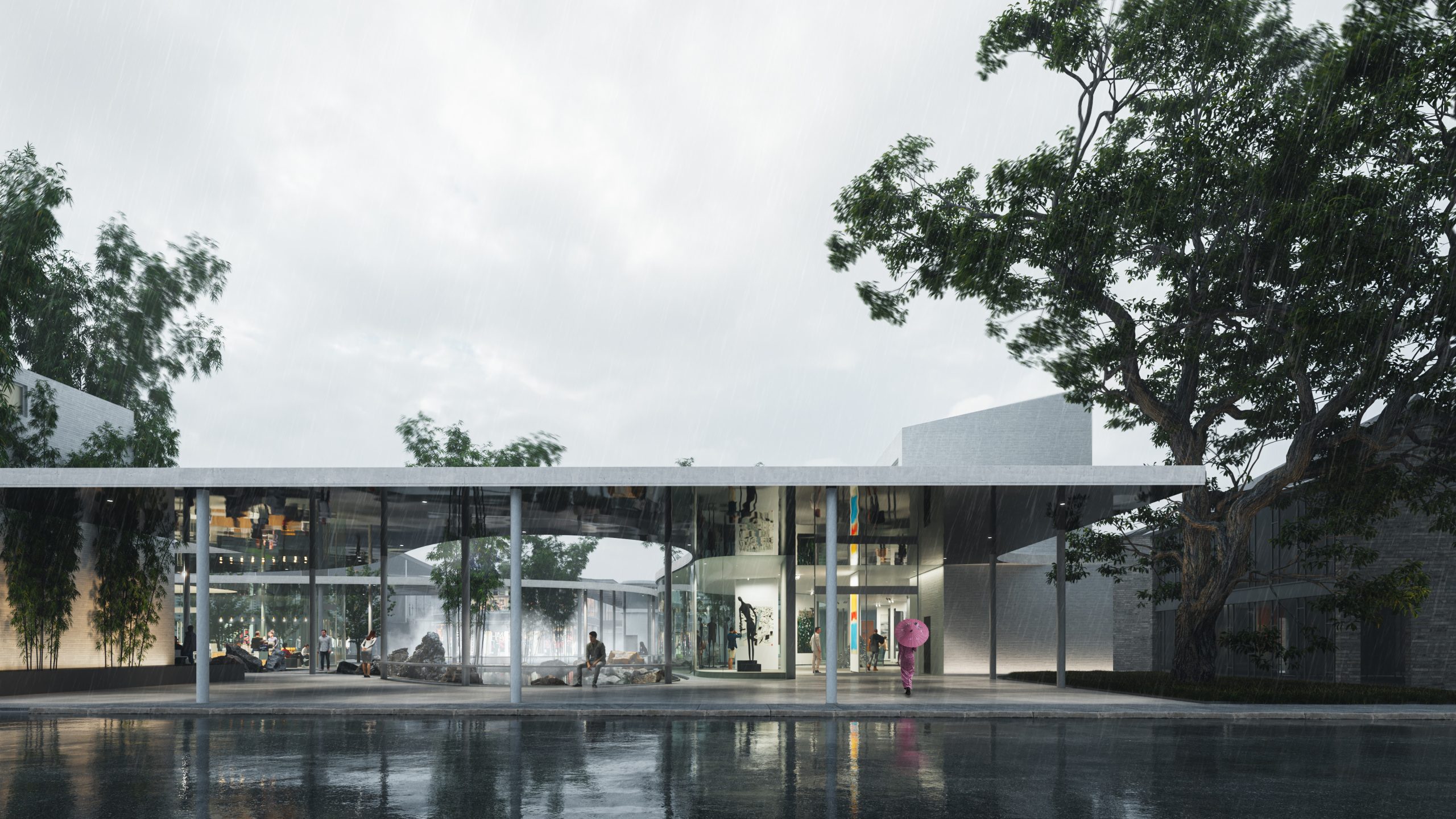
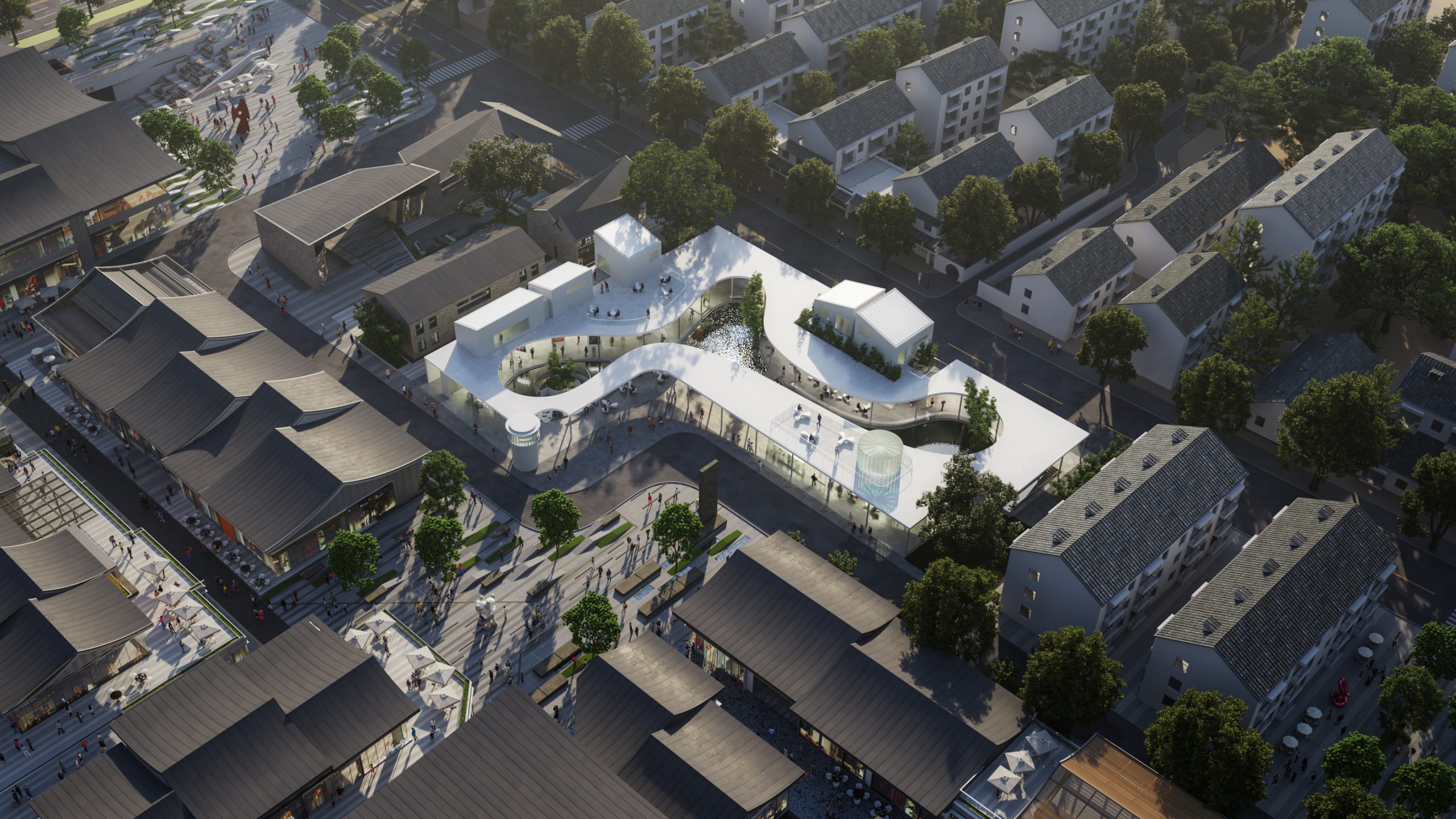
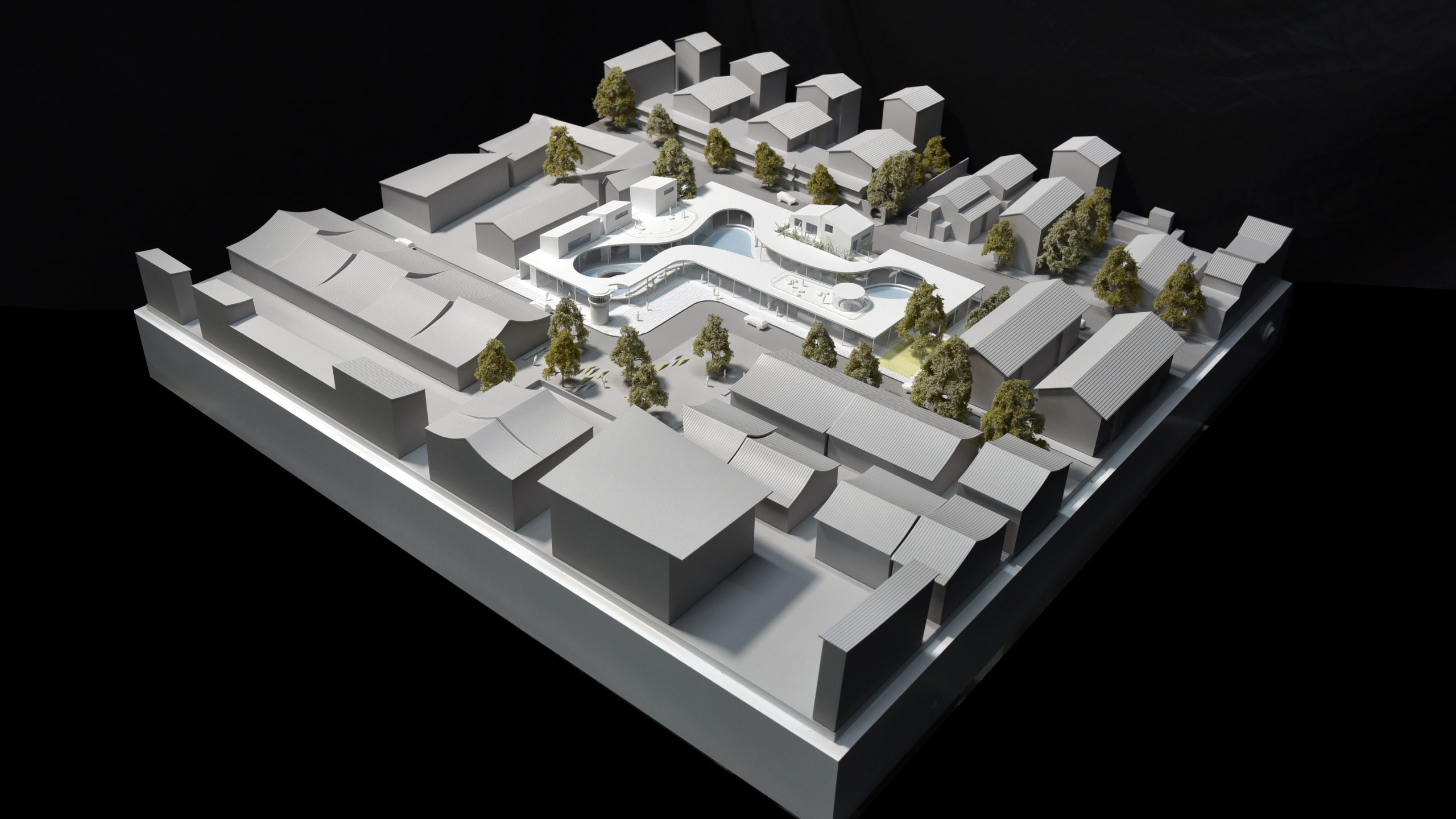
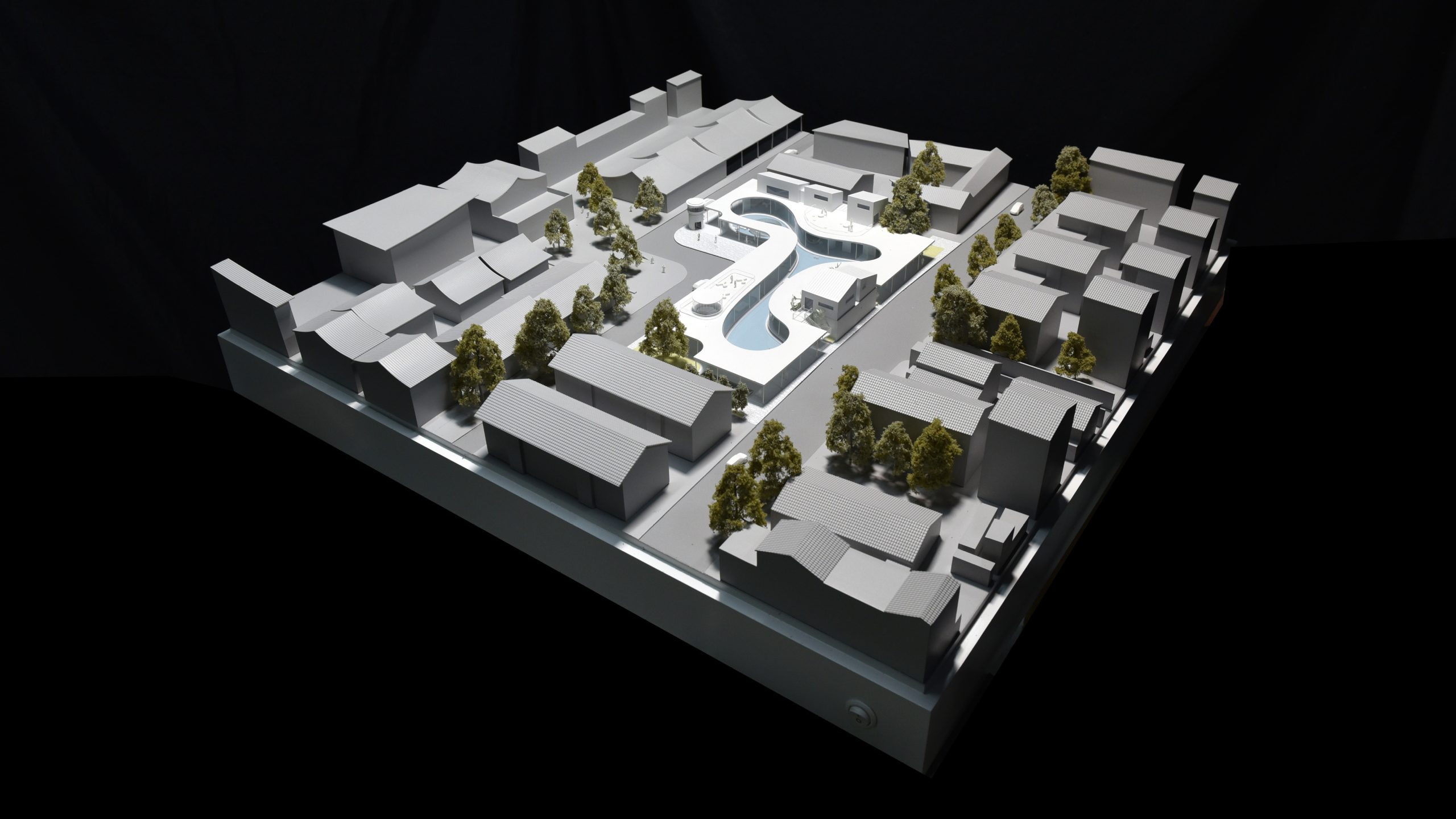
The plot of land is located east of Renheng Commercial Plaza, west of Cangjie Old Lane, north of Suzhou-style apartments, and south of cultural residences. It is surrounded by various types of spaces, including commercial, old streets, residential, and cultural areas, making the site relatively cramped and complex. Based on in-depth exploration of the Pingjiang Historic and Cultural District and on-site surveys of the surrounding environment, we believe that this project is not merely an architectural design issue but also involves urban design issues such as how to connect the site with the surrounding urban fabric. Should we create a building that competes and stands out among the surrounding structures or a building that harmonizes and humbly integrates with the surrounding environment? Should we focus on adding to the architecture or subtracting from it? We chose the latter.
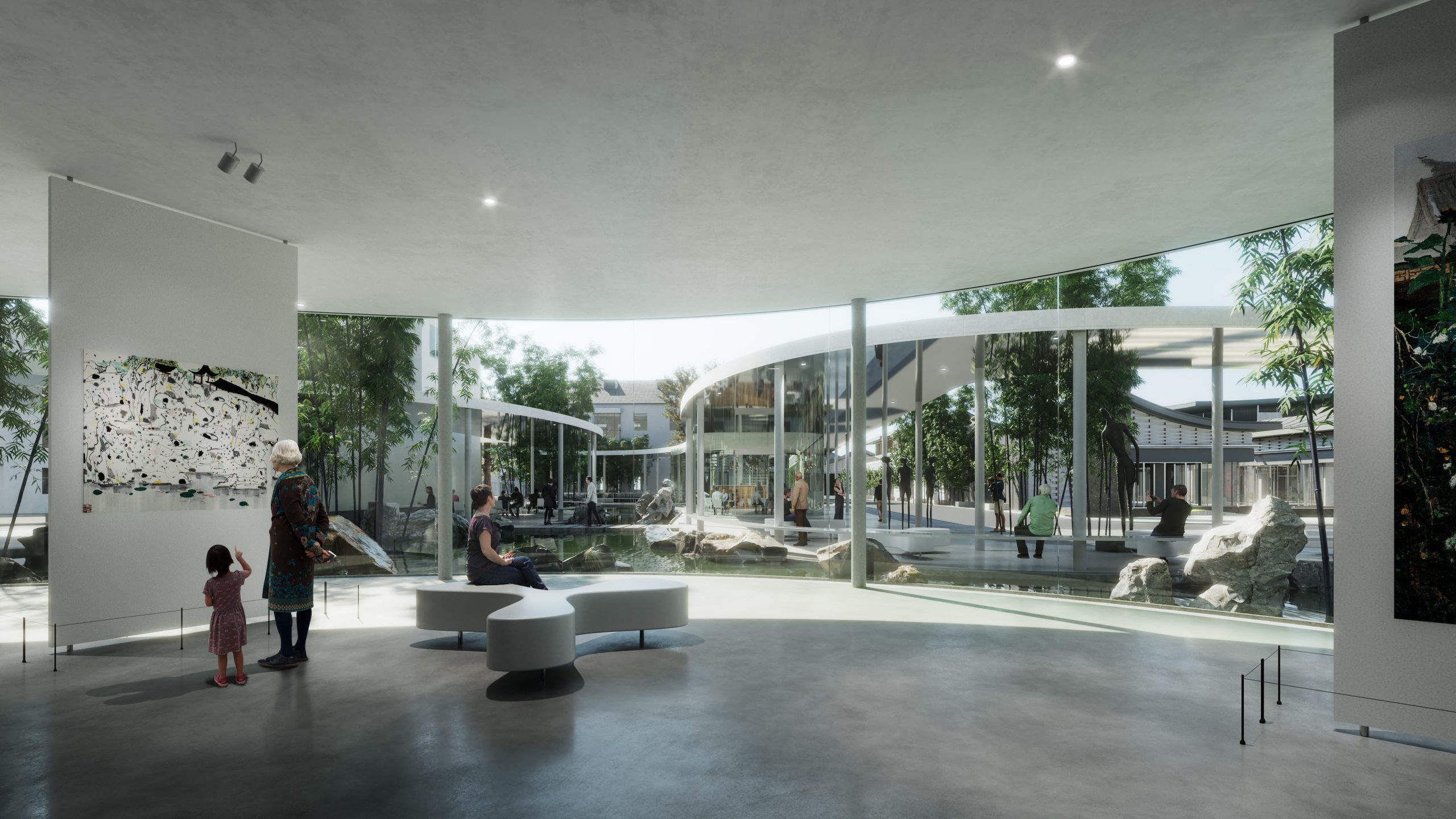
Overlooking the ancient city of Gusu, the uniform texture of the old city is adorned with scattered gardens, especially the water features within the gardens, which bring vitality and liveliness to the surrounding buildings and even the entire neighborhood. Water is not only the finishing touch of Suzhou-style gardens but also the soul that distinguishes Gusu from other regions. Considering the location of the plot, surrounded by bustling commercial areas and lively old streets, we aim to establish a close relationship with the surroundings by introducing an open modern garden water feature and constructing nearly transparent buildings around the water pool. This will create a community cultural living room primarily focused on gallery exhibitions while also serving as a window for visitors to learn about Gusu.
Through on-site research, we decided to preserve several large trees at the southwest and northeast corners of the site, the observation tower, and the newly built substation adjacent to Cangjie Street, while demolishing the remaining buildings. The cleared space will be occupied by a water pool, and a connecting corridor will be built between the water pool and the site boundary, providing sheltered spaces for people to pause and enjoy. The theme of the community cultural living room will introduce public spaces from different dimensions, harmoniously integrating with the public nature of the garden. The second-floor architectural volume serves as both a continuation of the first-floor functional space and an extension of the site’s architectural texture and skyline. We hope that this modern public garden with a community cultural living room theme will not only allow people to find a balance with nature amidst the dense commercial architecture but also ensure the inheritance of the soulful element of garden water features in the Suzhou Cultural Renaissance Plan.
The competition attracted 74 teams from around the world, with a total of 270 designers participating. The participants included major design firms from Shanghai, Suzhou, Hangzhou, Zhuhai, as well as universities such as the University of Hong Kong, Southeast University, Harvard University, and Columbia University. The competition consisted of preliminary and final rounds. In the end, the project “Cangyuan” won the second prize in the 2nd “Paradise on Earth, Creative Gusu” Design Competition. The work was exhibited at the 2021 Suzhou International Design Week.
Project Name: Cangyuan
Award: Second Prize in the 2nd “Paradise on Earth, Creative Gusu” Design Competition
Building Type: Cultural/Old City Renovation
Site Area: 2887 square meters
Building Area: 4537 square meters
Lead Architect: Wang Ruo
Design Team: Chen Tuo, Li Chuanzhang, Tang Haiyin, Liao Zhexuan, Chen Zihao (Intern)
Project Location: Suzhou, Gusu District, China
Design Period: July 2021 – October 2021
Project Status: Conceptual Design
评论被关闭。